
 EN
EN
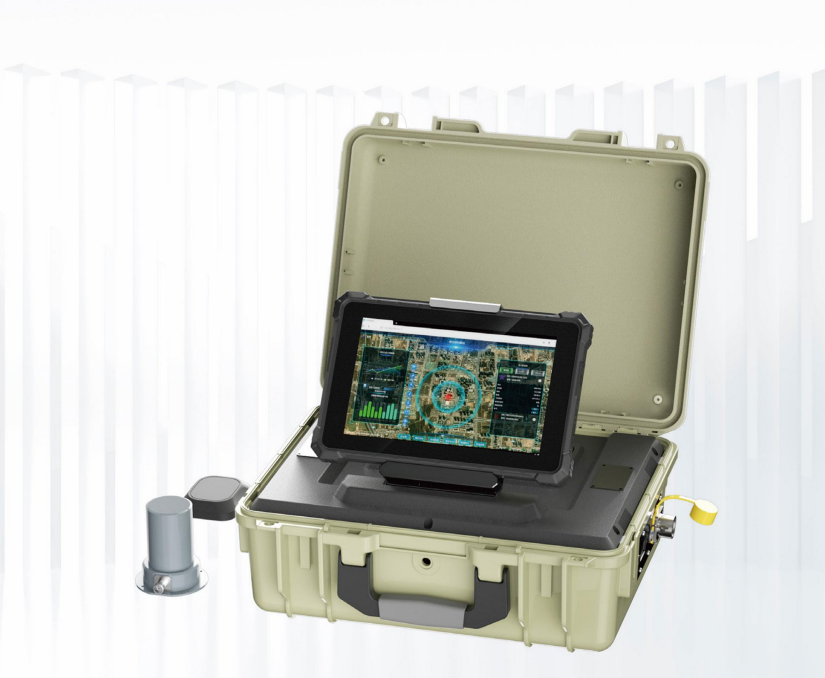
Defense Equipment at large events has shifted from fences and guards to signals in the sky. Portable counter-UAV tools now let a security lead control airspace over a stadium or summit. The sections below explain how detection, mitigation, and law fit together before a rogue drone becomes a headline.
Why Portable Defense Equipment Appears at Events
A Stadium That Lost Control of Its Airspace
A music festival organizer ignored drone sightings until a small quadcopter hovered over the crowd during the headline set. With no counter-UAV plan, staff could only watch. After the event, the venue procured portable Defense Equipment that detects and flags unknown aircraft. The near-miss pushed the operator from reaction to prevention, and the next event ran with a monitored airspace and a documented response chain.
Detection Must Precede Mitigation
A mitigation tool with no detection is a blind tool. Defense Equipment worthy of the name starts with RF and radar detection that classifies friend from foe, because jamming a legitimate film drone or emergency aircraft creates its own hazard. The detection layer feeds a cue to the responder, who decides whether the track is a threat. Skipping this step turns a security investment into a liability that disrupts the wrong signals at the wrong time. A responder who cannot tell a news helicopter from a rogue quadcopter risks shutting down the wrong operation, so the classify step is the part that earns the budget.
How Portable UAV Defense Works
RF Detection and the Identification Step
RF sensors listen for the control and video links drones emit, then fingerprint the model and the operator's frequency. Defense Equipment built around this step can locate the pilot, not just the aircraft, which matters when the law requires identifying intent before action. Radar and acoustic adds cover against silent or autonomous models that emit little. The identification step is where a good system earns its cost, separating a hobby flyer from a deliberate intrusion.
Mitigation Methods and Their Limits
Mitigation ranges from geofencing and warning to RF inhibition that severs the link, letting the drone land or return. Defense Equipment using inhibition must respect local law, because broad jamming also hits phones and emergency comms. Physical capture and net systems avoid spectrum harm but need line of sight and trained crews. Every method carries limits, so the plan matches the tool to the venue, the crowd, and the legal boundary drawn beforehand.
Deployment, Law, and Training
Who May Operate the Equipment
Authorization varies by country, and many jurisdictions restrict RF inhibition to state agencies. Defense Equipment sold to private venues often pairs with a trained operator holding the required license, or with detection-only modes that hand the response to authorities. A buyer should confirm the legal footing before purchase, because owning the hardware without the permission invites liability that no spec sheet erases. ISO security frameworks guide process, but the permit decides the deployment.
Pre-Event Planning and Logs
Control starts with a plan: define the protected zone, the response tiers, and the agency contact. Defense Equipment performs best when the team rehearses the cue-to-action chain and logs every detection, even the false ones, to build a pattern. NFPA and venue safety codes shape crowd and comms planning, while the airspace rule sets the hard limit. Documentation turns a one-off response into a repeatable, defensible security posture for the next event.
Defense Equipment for airspace control protects a crowd only when detection, law, and training line up. The festival near-miss showed that watching a drone is not the same as controlling it. Detect first, match the mitigation to the permit, and rehearse the response, and the sky over the event stays within bounds.
Frequently Asked Questions
What is counter-UAV defense equipment?
It is a system that detects, identifies, and optionally mitigates unauthorized drones over a site. Defense Equipment in this class pairs RF or radar detection with a response layer, which may be detection-only or include link inhibition. The goal is controlled airspace, not simply spotting a drone after it already hovers over a crowd.
Is portable drone jamming legal?
In many countries, RF inhibition is restricted to government or licensed operators, because jamming also affects phones and emergency radios. Private venues often use detection-only kits or work with authorized agencies. Always confirm the permit before buying, since the hardware without the license creates legal exposure rather than protection.
How does detection find a silent drone?
RF sensors catch the control link, while radar and acoustic sensors cover models that emit little or fly autonomously. Layering the methods raises the catch rate. A system that relies on one sensor type leaves gaps, so a venue facing real risk pairs at least two detection modes for dependable coverage day and night.
Can these systems stop a swarm?
Swarms stress any single sensor and responder, because many tracks arrive at once. Mitigation that acts on one link at a time lags behind. Planning for a swarm means redundant detection and a tiered response with agency backup. Defense Equipment helps, but the tactic and the legal authority decide whether a swarm is actually contained.
Do portable units need power and internet?
Detection sensors run on battery for hours and need little bandwidth, while cloud analytics help but are not mandatory. Defense Equipment designed for field use stores events locally and syncs later. The limit is battery life and crew endurance, so a venue plans rotations and spares for events that run past a single shift.
How should a venue start?
Begin with a threat assessment and the local legal boundary, then choose detection-first hardware and train a licensed operator. Hardware with a clear response chain beats a powerful jammer no one may lawfully use. Document detections and rehearse the plan so the next event inherits a proven posture, not a fresh scramble.