
TG SECURITY | Full Scenario Security Solution Service Provider
JIANGSU TG SECURITY TECHNOLOGY CO.,LIMITED
TG SECURITY
 EN
EN
Quick Links
TG SECURITY | Full Scenario Security Solution Service Provider
JIANGSU TG SECURITY TECHNOLOGY CO.,LIMITED
TG SECURITY
On December 18, 2025, the China Security and Protection Industry Association (CSPIA) successfully inaugurated the highly anticipated first stop of its "AI+" Security National Tour series in Beijing. Centered on the visionary theme "Empowering with Digital Intelligence, Co-building the Ecosystem—Exploring the New Future of 'AI+' Security," this landmark event brought together over 50 senior security industry executives, technical directors, and AI experts. Through high-level keynote speeches, interactive technical discussions, and immersive site visits, CSPIA established a highly efficient, closed-loop platform for seamlessly connecting government, industry, academia, research, and real-world application.
As a key strategic initiative responding directly to the national "AI+" action plan, the seminar aimed to address pressing industry bottlenecks that have historically hindered growth, including insufficient technological integration, limited application scenarios, and inadequate ecosystem collaboration. By bridging these gaps, CSPIA is actively accelerating the security industry digital transformation, ensuring that traditional safety infrastructures can transition smoothly into the era of predictive, data-driven intelligence. The integration of digital intelligence security represents not just an incremental upgrade, but a foundational paradigm shift in how global enterprises approach risk mitigation and situational awareness.
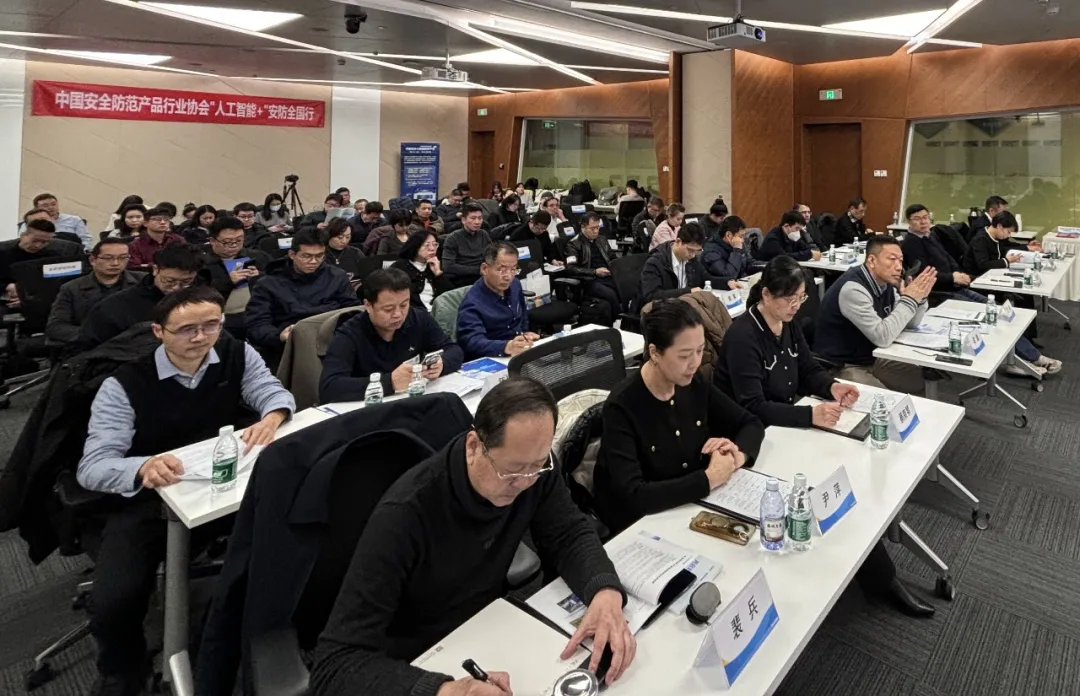
In his opening address, CSPIA Secretary-General Wang Nan emphasized that the security sector is no longer just a passive monitoring industry. Instead, it has become a core scenario for pioneering AI technology deployment and a vital force in safeguarding social security while empowering smart urban governance. He candidly noted that the challenges facing the industry's intelligent upgrade—such as data silos, high deployment costs, and fragmented algorithms—require collective exploration and unified industry standards.
Highlighting CSPIA's core mission to "serve members, lead the industry, and empower development," Wang Nan explained that the tour series was intentionally designed to adopt a highly pragmatic approach—"visiting benchmark enterprises." This methodology enables close, hands-on engagement with cutting-edge technologies and practical operational achievements. By doing so, CSPIA helps tech companies accurately grasp real security needs from end-users, promotes deep integration between scientific innovation and industrial upgrading, and ultimately builds an open, collaborative, and mutually beneficial new AI+ security ecosystem. Through this hands-on approach, CSPIA bridges the gap between raw technological capability and actionable field deployment.
During the technical exchange segments, leading industry experts invited by CSPIA shared deep insights on the practical deployment pathways of digital intelligence security. The discussions went far beyond theoretical concepts, offering replicable blueprints and concrete frameworks for enterprises navigating their own security industry digital transformation. Three core technological pillars dominated the technical analysis:
Vertical Large Models for Security: Experts demonstrated how domain-specific AI models can process massive multi-modal data streams (video, audio, and sensor logs) simultaneously. Unlike generalized LLMs, these specialized security models understand specific industry contexts, reducing false alarm rates by over 40% and enabling real-time automated incident reporting.
Advanced Spatial Analysis: By integrating GIS (Geographic Information Systems) with video analytics, modern systems can map security threats in 3D spaces. This allows security operators to track anomalies across complex urban landscapes seamlessly, drastically improving emergency response times and contributing to robust smart urban governance.
Risk Early Warning & Predictive Analytics: Moving from reactive monitoring to proactive prevention, these AI-driven systems utilize predictive algorithms to analyze historical patterns, forecasting potential safety hazards before they escalate into critical emergencies.
A major highlight of the event was the formalization of long-term collaborative frameworks. To ensure these technological innovations reach commercial scale, CSPIA signed comprehensive strategic cooperation agreements with several leading industry enterprises. Under these agreements, CSPIA and its partners are pledging deeper, sustained collaboration in four critical areas:
Joint R&D of highly tailored vertical large models for security;
Rapid deployment of cloud-intelligence integrated solutions;
Co-construction of an open industrial ecosystem with unified communication protocols;
Structured cultivation of professional, cross-disciplinary AI security talent.
Following the seminar sessions, participants visited the state-of-the-art technology exhibition halls of selected benchmark enterprises. This gave attendees a firsthand look at cutting-edge digital intelligence security application scenarios in action—ranging from AI-powered automated perimeter defense to intelligent traffic management systems. This immersive learning experience perfectly fulfilled CSPIA's goal of facilitating deep, experiential knowledge exchange among its B2B network members, thereby solidifying the foundations of the broader AI+ security ecosystem.
Secretary-General Wang Nan stated that this inaugural event is merely the beginning of a long-term, nationwide movement. Moving forward, CSPIA will continue to visit more benchmark enterprises in the AI and digital intelligence fields, focusing on diverse technological directions and nuanced application scenarios to create a regularized, specialized exchange platform.
By scaling this initiative, CSPIA aims to allow more security enterprises to directly benefit from technological innovation dividends, minimizing the digital divide between tier-one tech giants and regional security integrators. Ultimately, this tour will support the entire industry in accelerating its progress toward a new stage of high-quality, sustainable development. The successful launch of this Beijing seminar has laid a rock-solid foundation for building the AI+ security ecosystem, and it will undoubtedly inject stronger, long-term momentum into urban digital governance, critical infrastructure protection, and global social security safeguarding. Through sustained industry leadership, CSPIA remains committed to driving the next generation of global safety infrastructure.